This is atest project
Apr 8, 2022
Hello viewer 👋,
A kind disclaimer that this is a lengthy case study and it would take at least ⏰15 minutes to study thoroughly. Kindly, accompany yourself with a cup of coffee ☕️and enjoy the case study.
You can play some music in the background while reading this case study if you’d like 😄
🎧Headphones and a 🔈volume of 15% is recommended.
Brainstorm
I used a brainstorming tool called SimpleMind to jot down whatever questions i had in my head. I had a lot of thoughts and i basically use this to question from different angles. It necessarily doesn’t have solutions but general thought process of the statement.
Here’s a screenshot of the mind map:

After jotting down my thoughts, I googled few questions to better understand this domain. Some of the key searches were:
why people want a todo list?
psychology of to do list
who uses to do list
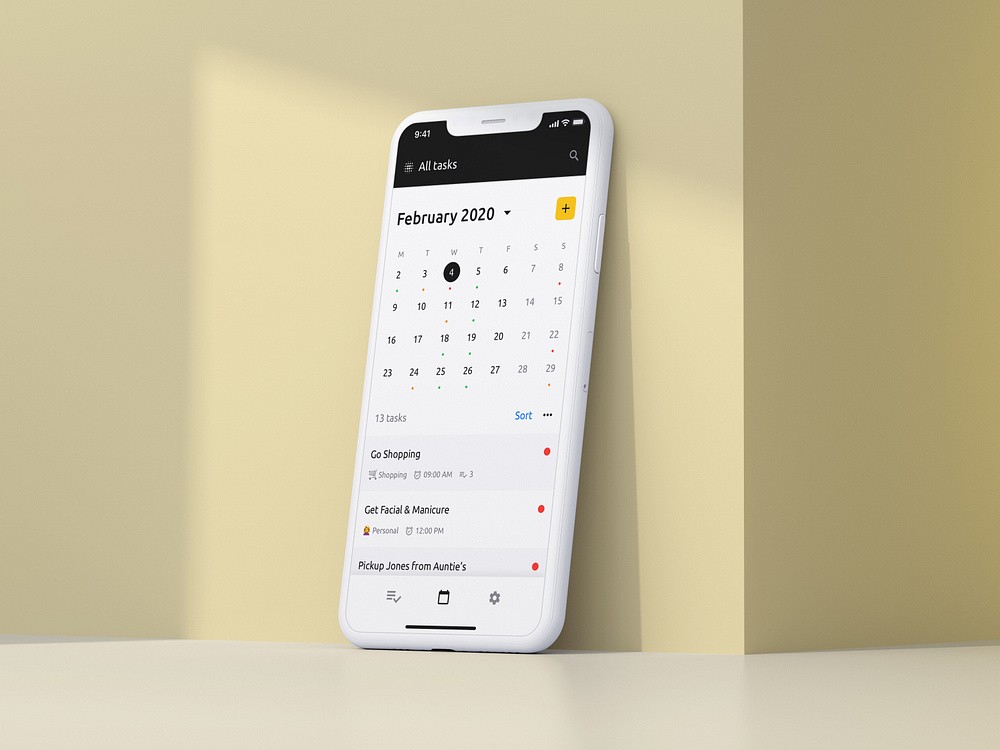
I found a couple of insights which were really helpful in giving me a direction for creating the UI of this app...
Organisation: Getting organised is a great way to improve your memory, and it can also help you stay motivated and be more productive. One study showed that fifteen minutes spent planning could save an hour of execution time!
Memory: The average person's short-term memory can only hold 7 pieces of information for about 30 seconds. If you have more than 7 tasks that you need to remember, you are already setup for failure.
Focus: One study, conducted by the Harvard Business Review, showed that 90% of managers wasted valuable time through poor time management. Your to-do list will help you focus your attention.
Clarity: You will feel less stressed because all your ‘to do’s are on paper and out of your mind. You have clarity on what you need to get done.
Psychologist and author Dr David Cohen puts our love of to-do lists down to three reasons: they dampen anxiety about the chaos of life; they give us a structure, a plan that we can stick to; and they are proof of what we have achieved that day, week or month.
The so-called “Zeigarnik effect” – that we remember things we need to do better than things we’ve done – stemmed from observing that waiters could only recall diners’ orders before they had been served.
More recently, a study by professors Baumeister and Masicampo from Wake Forest University showed that, while tasks we haven’t done distract us, just making a plan to get them done can free us from this anxiety. The pair observed that people underperform on a task when they are unable to finish a warm-up activity that would usually precede it.
Detail isn’t the only important factor, however: you also need to be realistic about how long things will take if you want to construct a workable timetable for the day.
One trap people fall into is to consistently avoid tackling the larger, more major projects. The best way to overcome this is to break them down into much smaller, achievable blocks. “Write my novel” is a pretty foreboding task; “outline first chapter of my novel” is far friendlier and stands a chance of getting done.
A recent study found that only 17% of the population can accurately estimate the time something will take.
Some disadvantages of To Do Lists are:
They get so overwhelmed just by looking at all the things they need to do.
They don’t know how to prioritise the items on list.
They feel that they are continuously adding to their list but not reducing it.
There’s a sense of confusion seeing home tasks mixed with work tasks.
Research & Analysis
UI Design
Resources
References
Phew!!! 😅
Thank you so much for reading through my case study 🥳🥳
Couple of question were asked in the test link:
Please write a few lines about the design you’ve just created: what your overall concept was, how you selected the style of the app, what made you integrate your steps, or anything that you feel is important to say about it.
I don't think this question needs an answer 😝This whole page describes the thought process of my solution of creating a To Do application.
Show us an article you've read and liked recently (you can just drop the link here).What did you like about it and why do you think it was useful for your professional development?
I recently started reading this book called Fluent Forever. It's a structured approach to learn languages efficiently and retain more information. I am doing this to speed up my language learning process (I'm currently learning 🇪🇸Spanish). Hence, I read a lot about linguistics and it's impact on children and general behaviour. Whilst reading through, I came across this amazing article which simply explains how language can affect behaviour and in-turn influence the cultural and organisational aspects of society or workplace. I'm still learning more about other effects of Whorfian effects and understand from organisation's perspective. The main questions while reading these articles are, How can we make the workplace more fun and less accidental?
Cheers and have a great day 😃 🥳